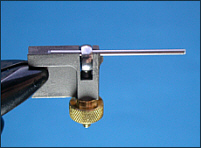
Using the Needle Fly Kit
DISCONTINUED
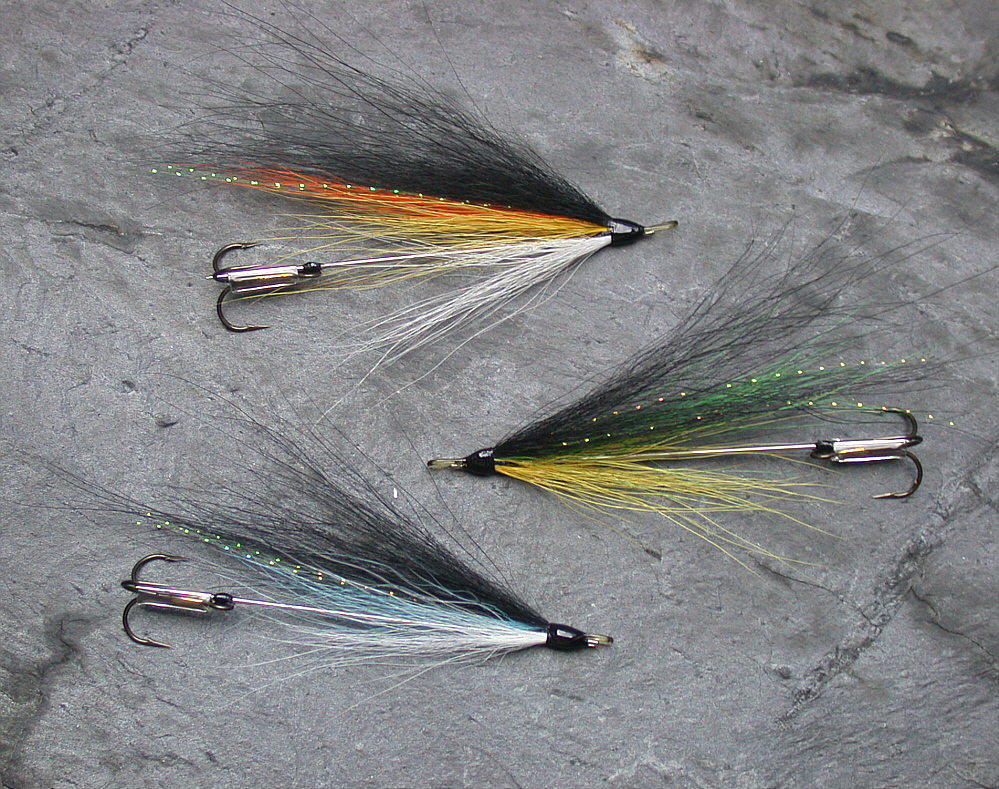
Needle Flies have
now been replaced by Needle Tubes
Making
Slim Salmon and Sea Trout
Needle Flies
NOTE: This kit
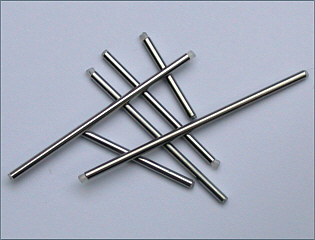
is for making Needle Flies (i.e. flies dressed on sewing
needles) NOT Needle Tube Flies
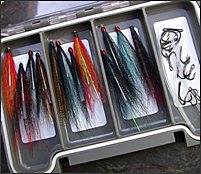
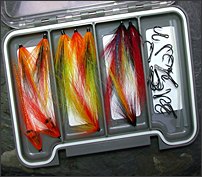
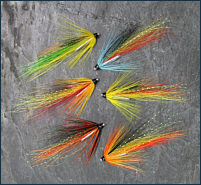
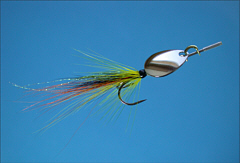
The Needle Fly was devised in the
late nineteen nineties and precedes the more recently developed
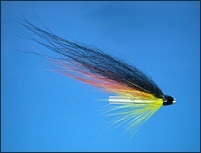
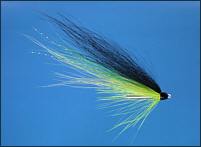
Needle Tube Flies , examples of which is shown to the
right.
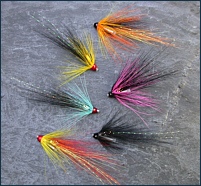
NEEDLE FLIES
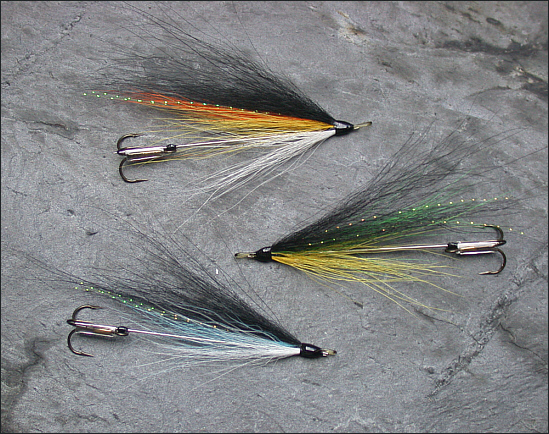
Needle Flies
for Sea Trout, Salmon and Steelhead Fishing
For full details
of our kit components, see:
Needle Flies
Instructions
Instructions for use with the Needle Fly
Kit, now available in our
online shop.
This kit has been put together for those who would like to tie
their own Needle Flies but might find some of the components (
such as PVC tubing) not readily available.
The kit does not include fly tying
tools, thread or materials. To complete the Needle Fly, in addition to
the components supplied, you will need standard fly tying tools,
thread, varnish and dressing materials such as squirrel hair.
This kit should be purchased and
handled only by adults with some experience of fly tying.
SAFETY
Fishing
hooks and needles may cause injury.
It
is strongly recommended that the materials in this kit should be purchased and
handled only by adults with some experience of fly tying. Please handle needles
and hooks very carefully and keep out of reach of children. The construction of
the Needle Fly, as in all fly tying, involves the risk of minor injuries from
hook and needle points etc.
Take
all sensible precautions while handling the materials in this kit. It is
essential that you wear a safe and effective form of eye protection, such as
safety glasses, when handling and using the needles and hooks in this kit,
as needles and some hooks are brittle and may break when bent. It is also
important to wear effective head and eye protection when fly fishing.
Instructions - How to make a Needle
Fly
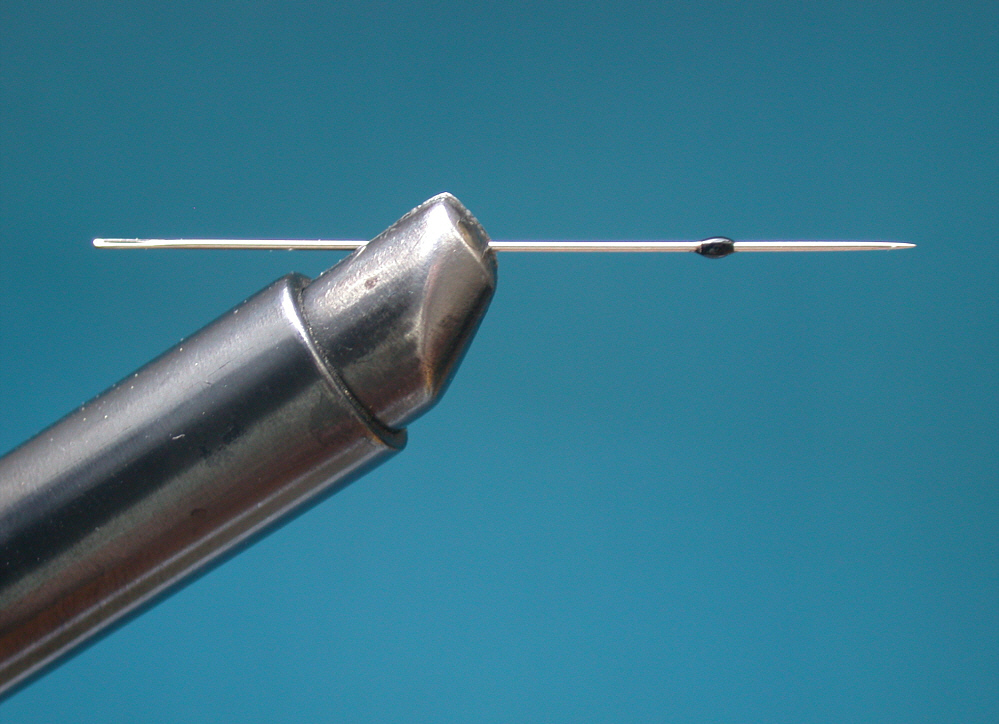
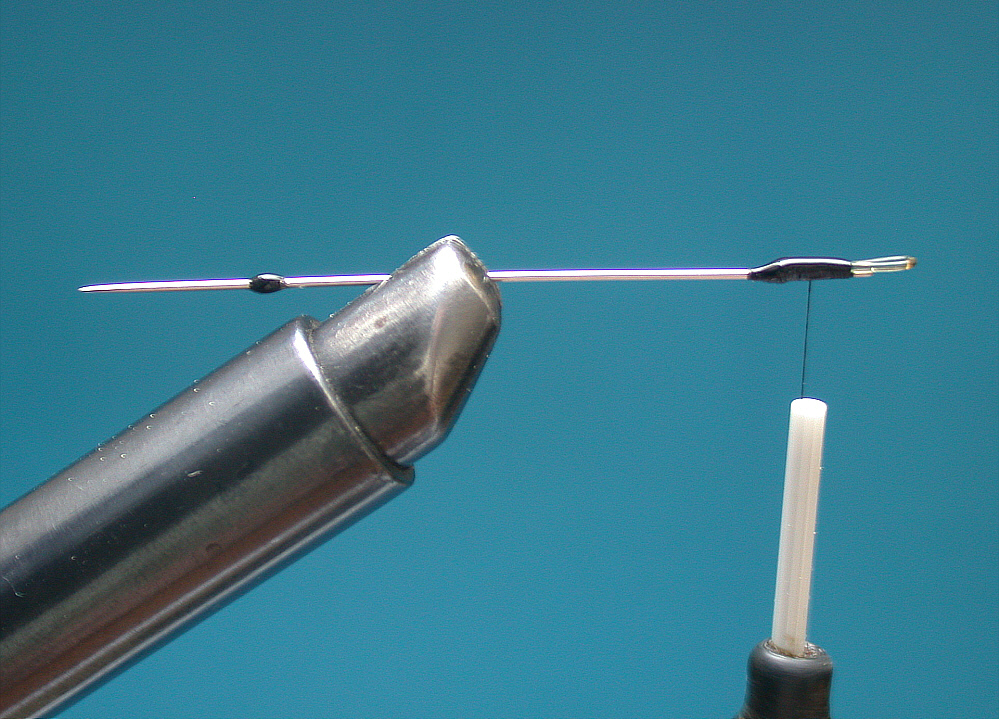
Select
a needle and fit in fly tying vice so that around two to three centimetres
of the pointed end of the needle is exposed to the right of the vice (if
right handed). Be careful when handling the needles as they are brittle and
may break when bent.
At one centimetre from the point, apply a tight
wrapping of fine tying thread no more than 2 millimetres in length. This
wrapping forms the needle stop and should be just thick enough to
prevent the needle slipping through the PVC sleeve on the treble hook while
fishing. Apply two coats of varnish to the thread stop (allow to dry between
coats).
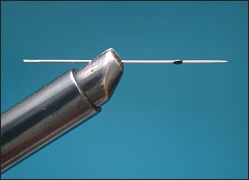
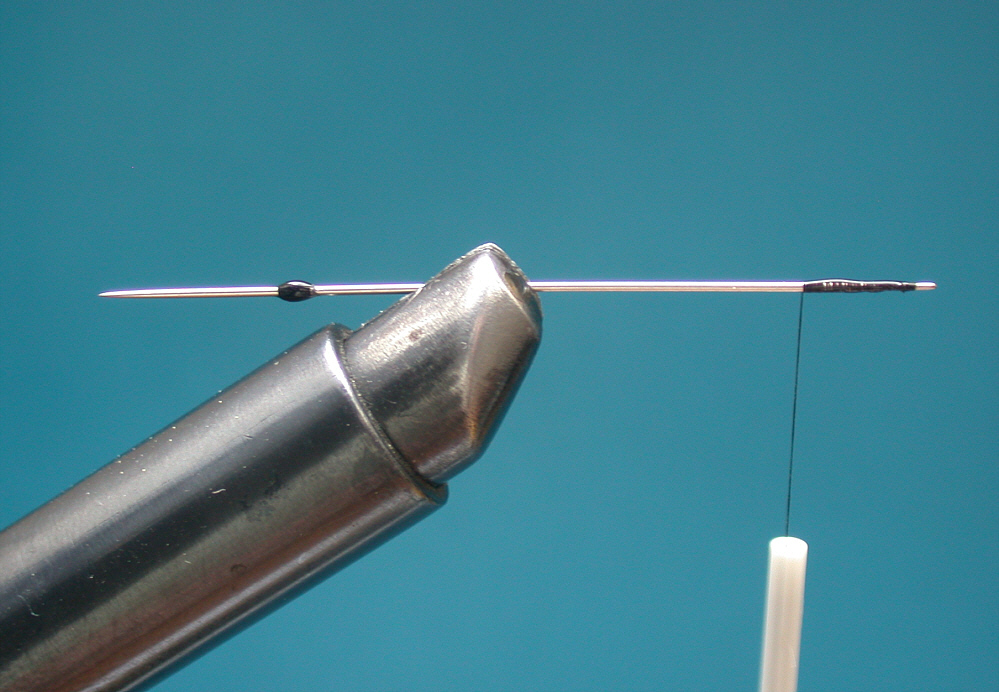
Remove
the needle from the vice, turn it and fit with the eye to the right,
allowing enough room to work on the dressing. Be careful not to damage the
thread stop, which should now be to the left of the vice jaws.
Lay
a bed of tying thread, around half a centimetre long, behind the eye of the
needle.
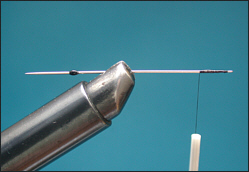
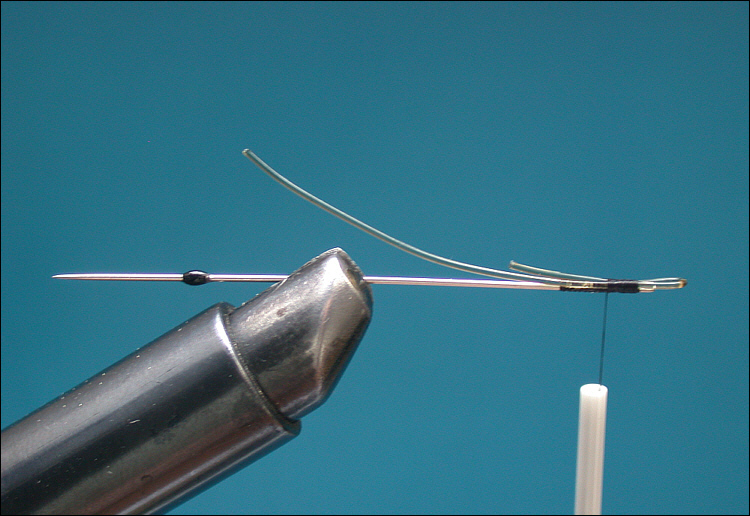
Take a
length of strong nylon monofilament and form a loop
in the end. Lay this loop, pointing forward, over
the bed of tying thread and continue with enough
firm turns of thread to secure the loop.
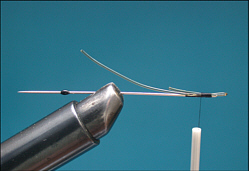
Cut off the
excess ends of the monofilament and cover the ends
with tying thread to give a smooth, level bed for
applying the dressing of your choice. The loop
should be large enough to allow a leader of around
twelve pound breaking strain to be easily threaded
through it. Apply a coat of thin varnish to the
whipping.
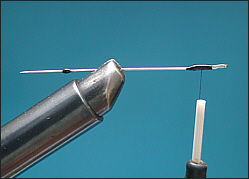
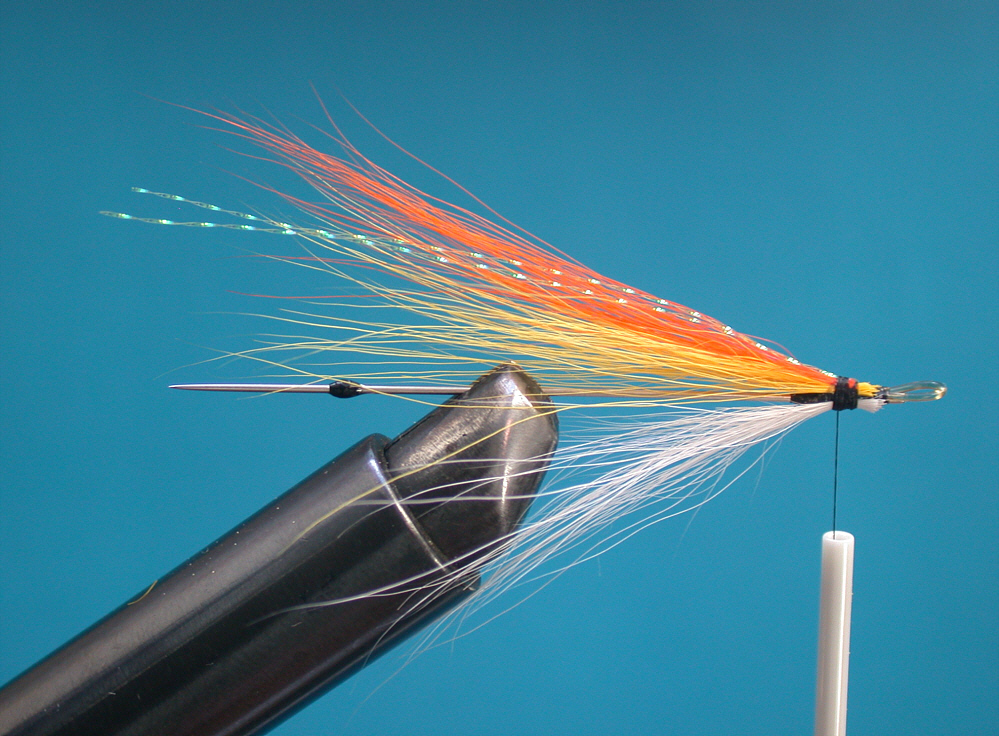
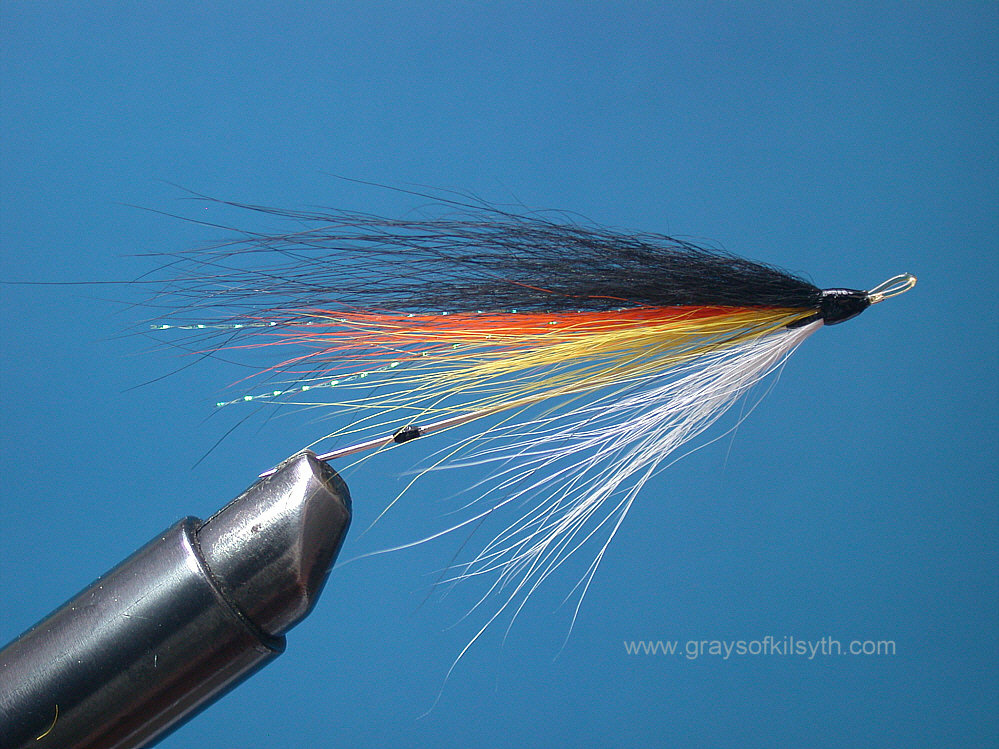
The
needle can now be dressed in any way you wish. I generally prefer a fairly
sparse dressing of hair, usually squirrel or Arctic fox, extending to the point of the
needle, with a strand or two of Crystal Hair. I leave the silver shank of
the needle bare.
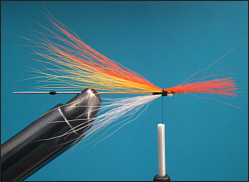
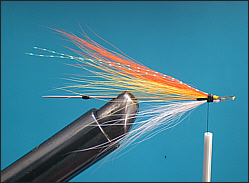
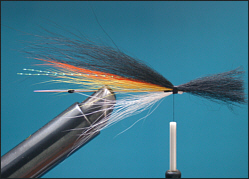
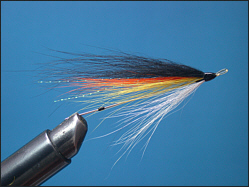
Select
a treble hook and PVC tubing of appropriate size (the thicker PVC tubing,
bore 1.5mm, is
better for the larger treble hooks, size 10 or 8; thinner PVC tubing with a
bore of 1.0mm is better for fine wire treble hooks size 14 and 12). Cut a short length of PVC and carefully
slide it over the eye and on to the shank of the treble hook, leaving the
eye of the hook clear.
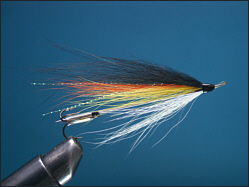
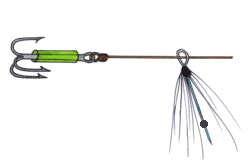
Attaching
the Needle Fly
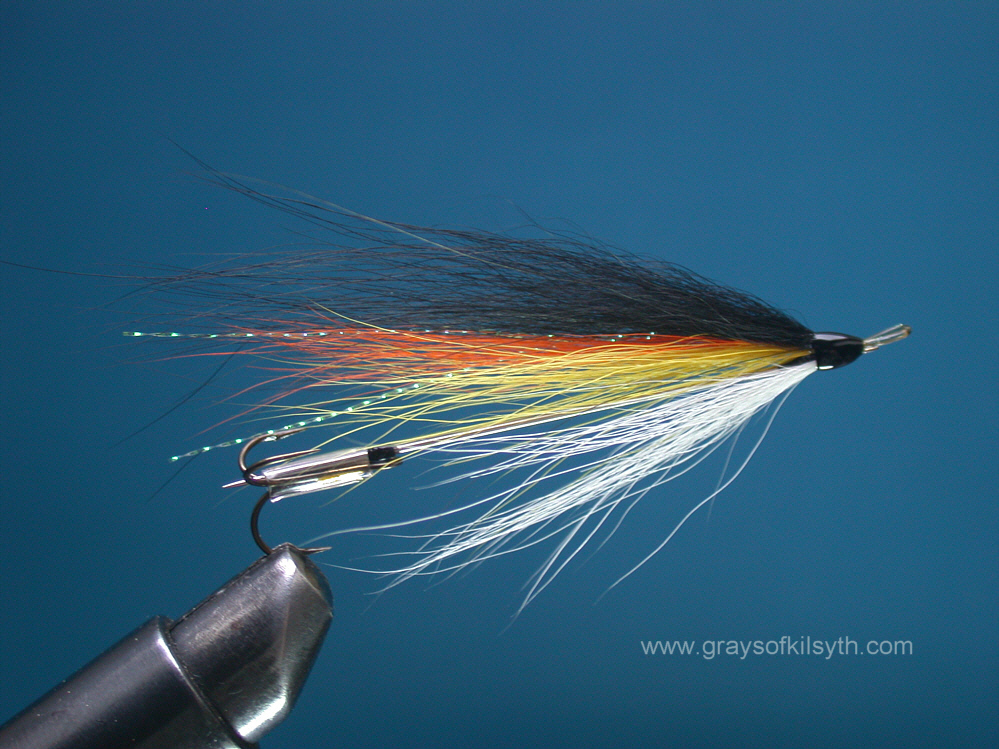
STEP 1
- Thread the line through the "eye"
of the Needle fly and attach one of
the specially adapted treble
hooks.
STEP 2
- Carefully push the point of the
needle into the plastic sleeve on
the treble hook until the plastic
stop on the needle touches the
sleeve.
Step 1
Step 2
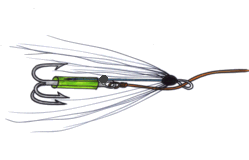
It is important to wear effective
head and eye protection when fly
fishing.
Attached Needle Fly
|
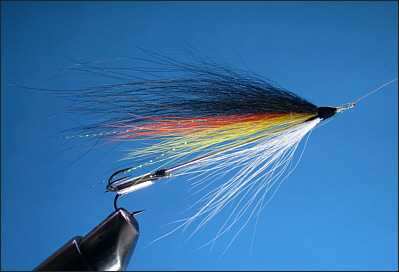 |
Click on the above image to enlarge
Details of the needle fly were first
published in the article, "Needles
for Sewin", by John Gray, Trout & Salmon magazine,
September 1999
****** NEW FOR THE SALMON
AND SEA TROUT FLY TYER
******
GRAY'S NEEDLE TUBES
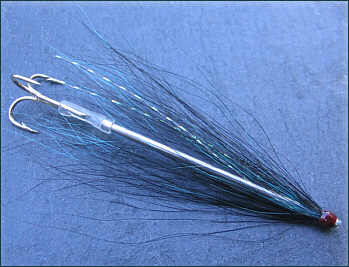
fine
stainless steel tubes with an outside
diameter of only 1.5 mm
the
thinnest metal fly tying tubes
available online
|