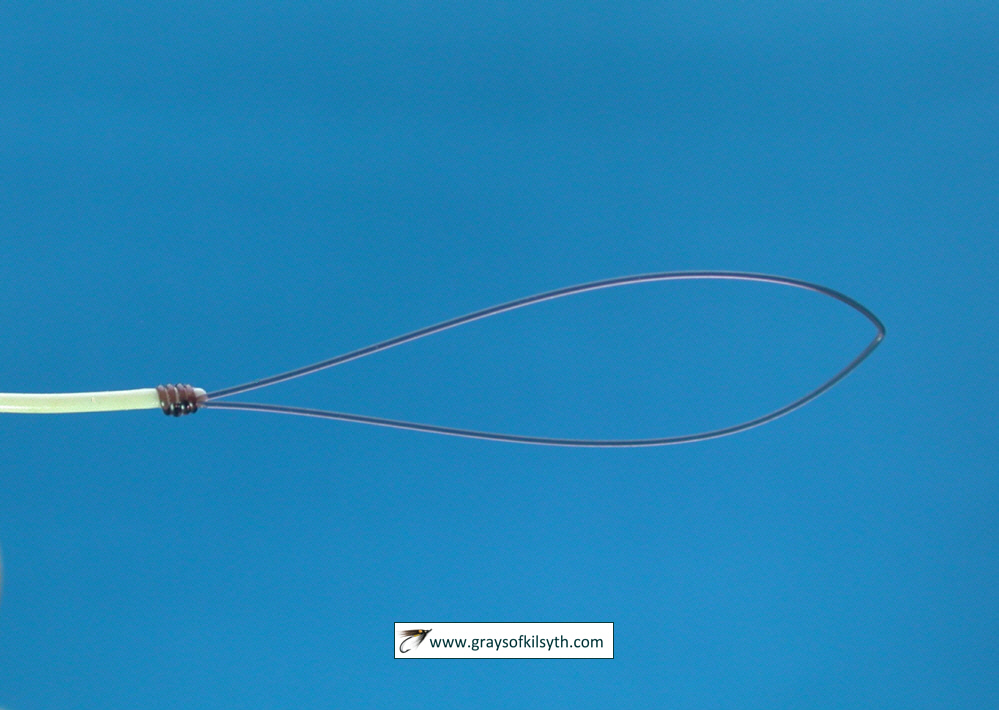
Gray's Loop
Fly Line Leader Loop
How to tie the finest of all fly line leader loops to the end of a fly
line
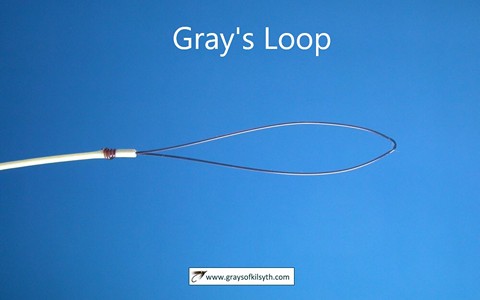
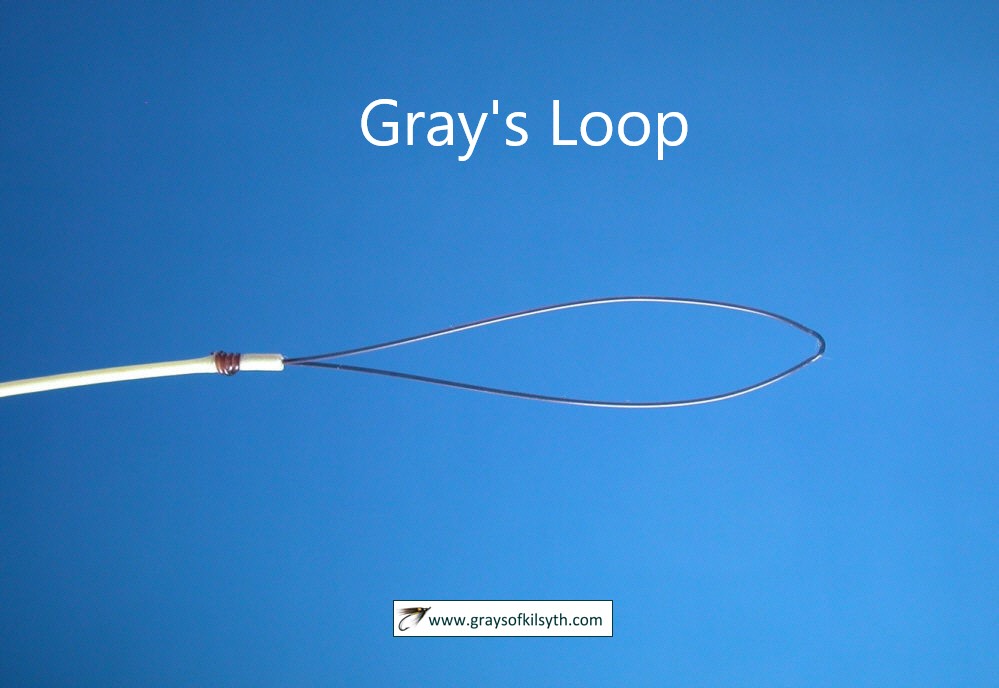
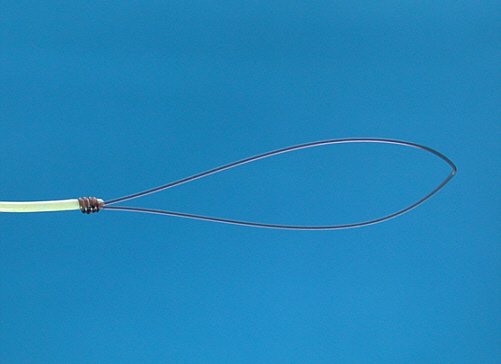
Gray's Loop - a fine mono leader loop
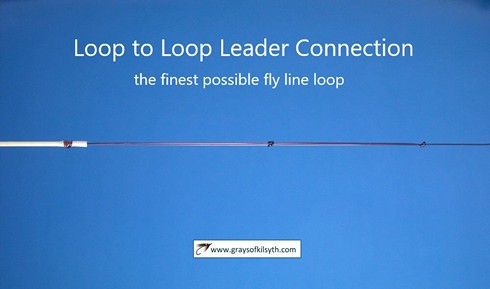
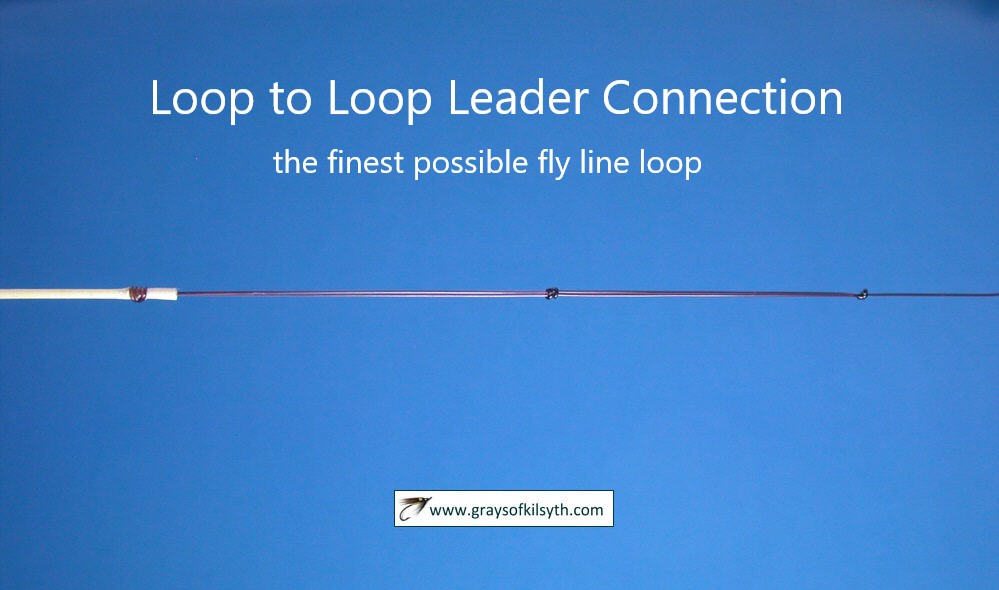
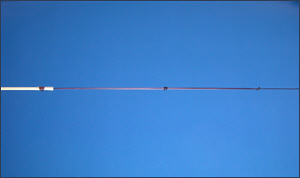
Gray's Loop with connected leader (loop to loop) - a very fine connection
Gray's Loop is a version of the
Constriction Knot (see
Fly Fishing Knots) used to attach a semi-permanent loop of nylon monofilament to the end of
a traditional PVC coated, braided core fly line to facilitate a loop to loop connection
with the leader. Such a loop might last a whole season.
Attaching Loop to Fly Line
The tying procedure is similar to that
used for the Needle Knot or Nail Knot, but with a doubled length of monofilament
nylon. The tying of Gray's Loop is illustrated in the series of photographs
shown below.
How to tie Gray's Loop
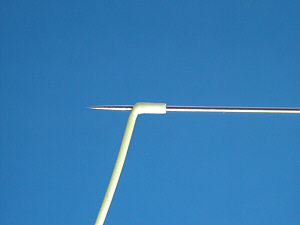
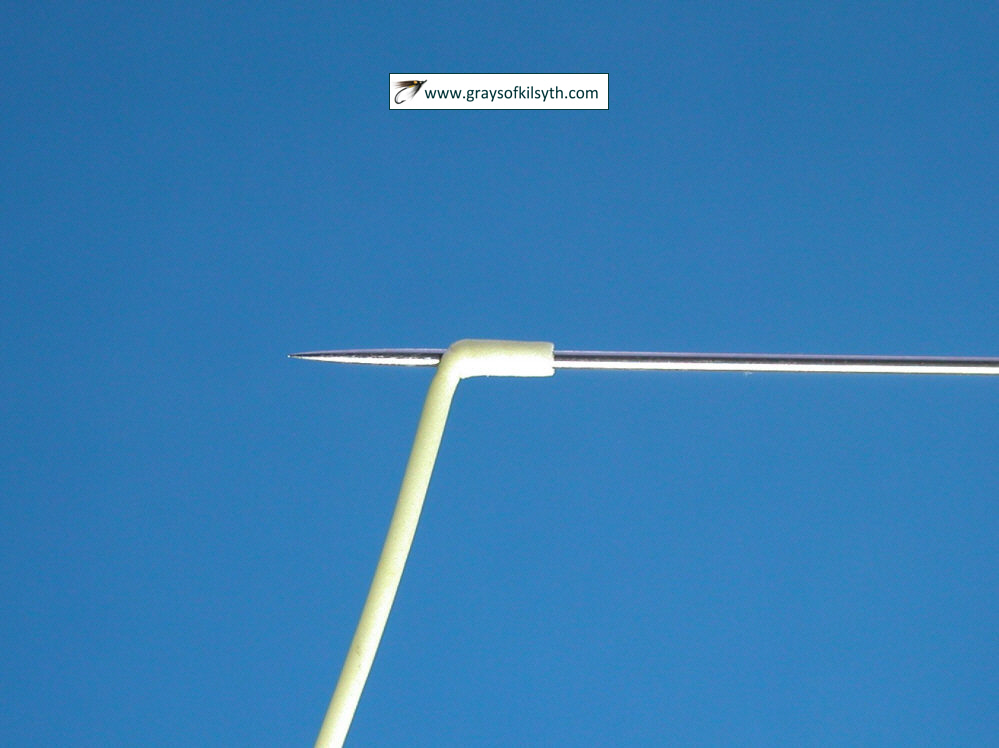
Step 1
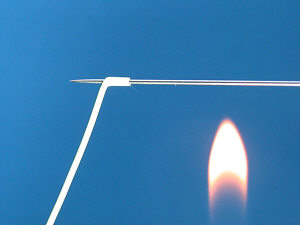
Carefully insert a needle ( I
have used a size 7 long darner) into the centre of the end of the
fly line and out the side wall of the fly line about half a
centimetre from the line tip. It is important that the needle is
pushed up the centre of the internal braided core of the fly line.
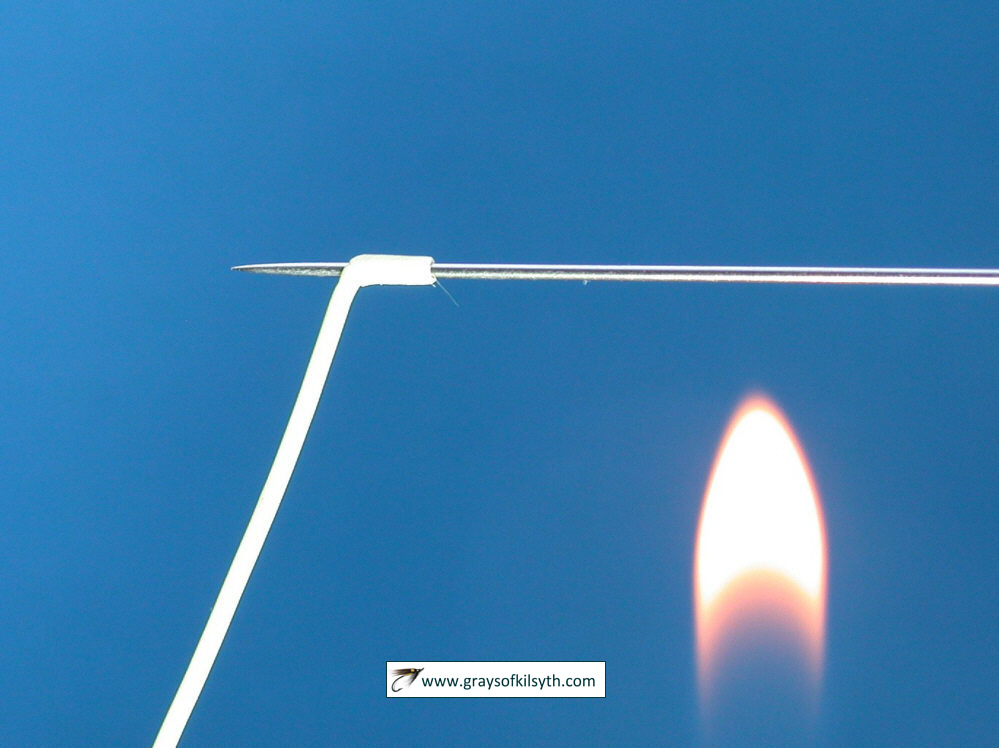
Step 2
Heat the needle with a lighter
for a few seconds to set the hole made by the needle. This
facilitates the threading of the nylon monofilament through the
hole.
Step 3
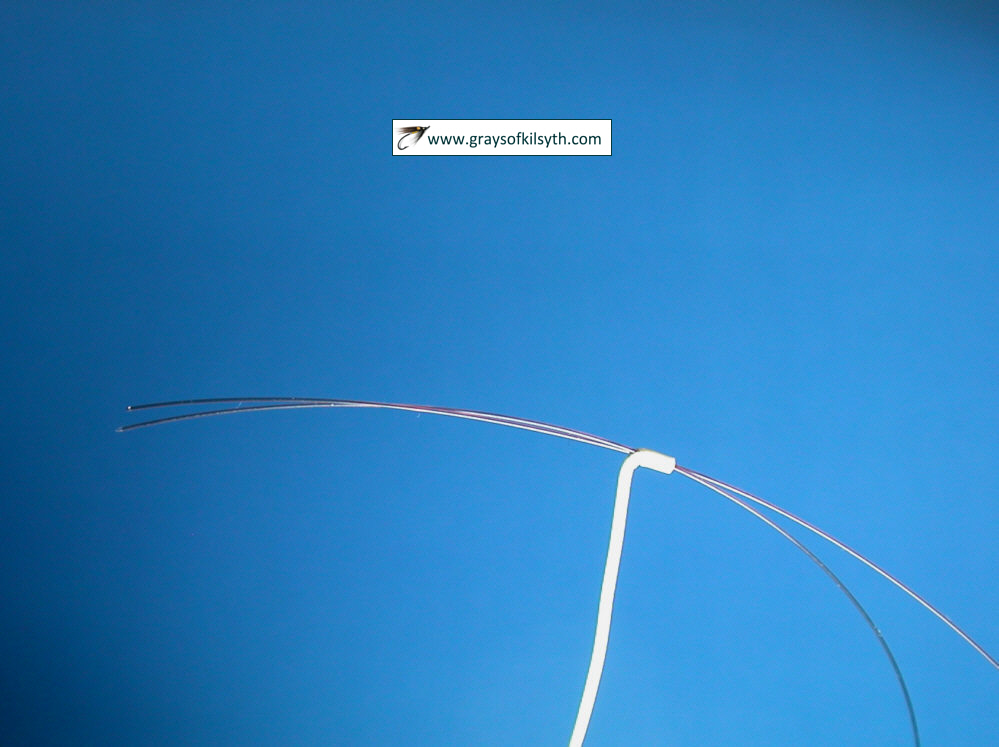
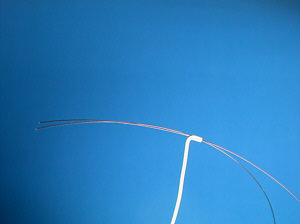
Take an eighteen inch length
(half a metre) of suitable nylon monofilament, double it and thread
both ends through the hole made in the fly line and out the side
wall. Cutting the ends of the monofilament at a sharp angle makes it
easier to thread through the hole in the fly line. See the table below for suggested line/monofilament weights.
Step 4
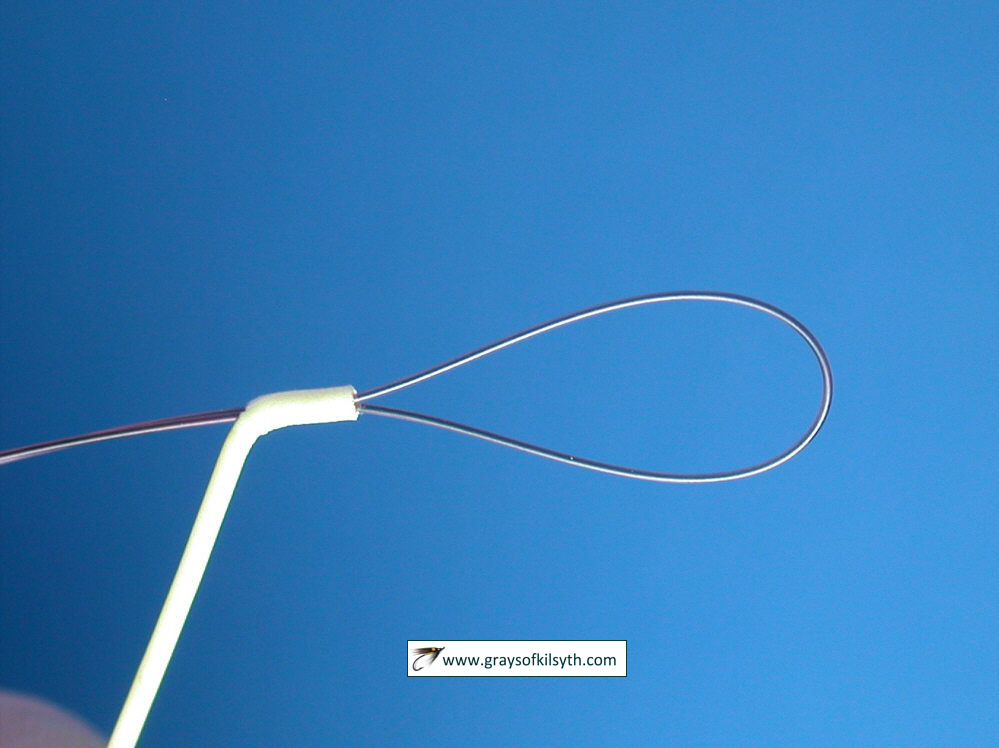
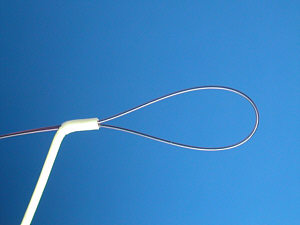
Pull the doubled monofilament
through until you have a loop of anything up to an inch long. This
will give a finished loop of around two inches. If you want a
smaller loop of around an inch long, start with as small a loop as
possible at this stage.
Step 5
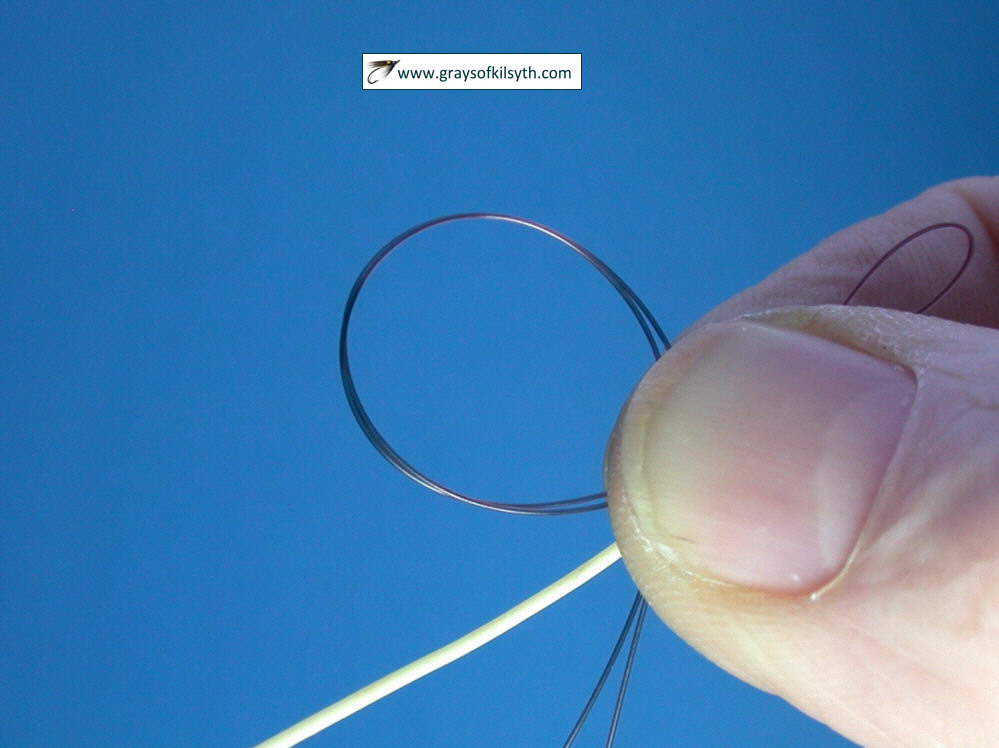
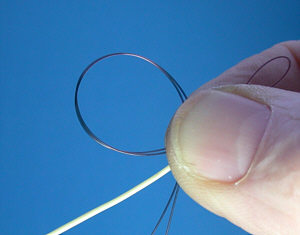
Form a loop in the doubled
monofilament and grip firmly between the thumb and forefinger of the
right hand (see the main Fishing Knots page).
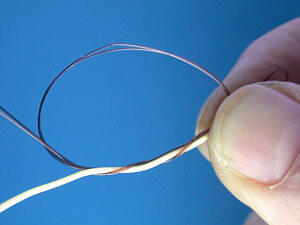
Step 6
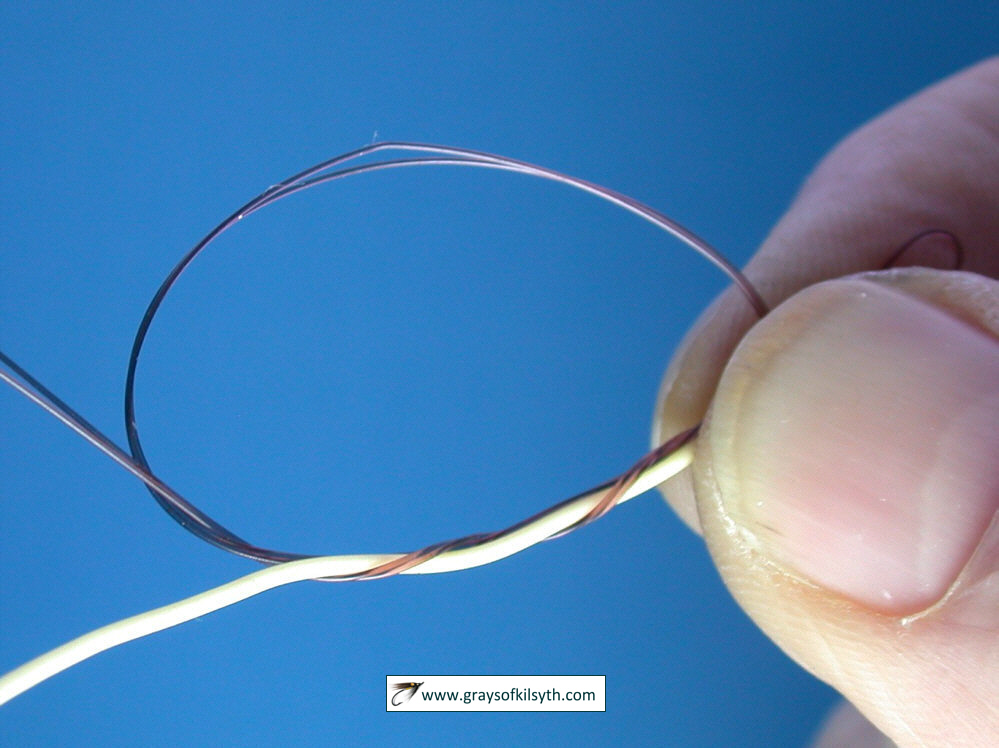
Keeping a firm grip on the
line and loop with the right hand, use the left hand to bring the two ends of the
monofilament through the loop (and round the fly line) two or three
times, any more than three making the knot more
bulky.
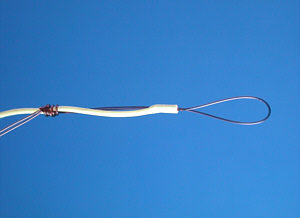
Step 7
Carefully draw the knot
together so that the turns of the knot are touching. Do not over-tighten at this stage. The knot must be slid along the line
towards the tip before tightening fully.
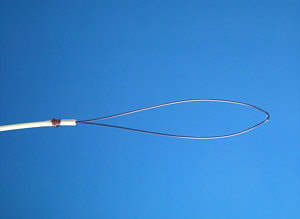
Step 8
Slowly slide the knot towards
the tip of the fly line, keeping the turns of the knot together. When
you have the knot in place, with a finger of the right hand in the
loop and the left hand gripping the two ends of monofilament,
tighten by pulling steadily until the knot grips the fly line
tightly. To test the security of the knot, grip the fly line in the
left hand and, again with a finger in the loop, pull steadily in
opposite directions. When satisfied, trim the ends very close to the knot. Though not essential, a coat of
varnish may be applied. TYING TIPS
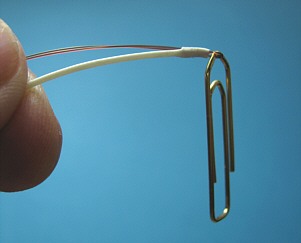
Starting
with a length of about 18 inches [half a metre] of nylon
makes it easier to pull the knot tight. Also, if you
want to create a small loop, start with as small a loop
as possible, using a paperclip on the loop to keep it
from slipping though the hole in the fly line:
Loops of one to two inches in length are easily formed,
although a loop of anything up to around
three inches long works fine. The strength of the
nylon loop will vary with the weight of fly line and
breaking strain of leader. As a guide I use the
following :
|
FLY LINE # |
LEADER
b.s. |
LOOP
b.s. |
|
5 |
3 - 5 lbs |
10 lbs |
|
6 |
4 - 6 lbs |
12 lbs |
|
7 |
6 - 8 lbs |
12 lbs |
|
8 |
8 - 12 lbs |
15 lbs |
|
9 |
10 - 12 lbs |
15 lbs |
|
10 |
12 - 15 lbs |
18 lbs |
1 kilogram = 2.2 lbs
GRAY'S LOOP
The Completed Loop
The
completed loop is fine, strong and durable.
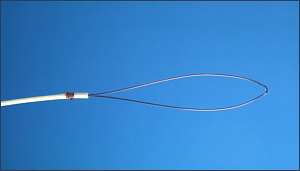
Gray's Loop and leader
joined
by a loop-to-loop connection - the finest
loop-to-loop connection I know, resulting in a
minimum of surface disturbance.
This knot is
not suitable for fly lines with a kevlar or
monofilament core. The fly line must have a
hollow braided core, as in most traditional PVC
fly lines. For other useful fly fishing knots,
see
FLY FISHING KNOTS.
A QUICK AND SIMPLE GRAYS LOOP
A much simplified, yet serviceable, version of
Grays Loop might be tied to the end of the fly
line by omitting steps one to four above. Simply
align the doubled length of monofilament with
the end of the fly line and begin at step five,
tying the loop on the end of the fly line
without first threading it through the core of
the fly line. Trim the end of the fly line close
to the knot. I have found this to be
secure and reliable, if not quite as neat as the
needle knotted version. This simplified loop can
be tied quickly on the riverbank if need be.
Again this knot is only suitable for lines with
a braided core.
|